


Whether you´re towing a small or large trailer, a boat, or U-haul, you need a trailer hitch. There are different classes of trailer hitches that cater to different factors - mainly, the weight of the trailer you have, and how much your vehicle can tow.
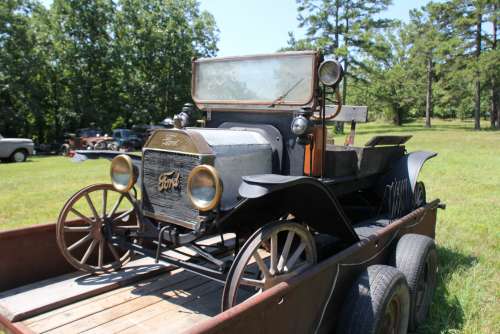
1916 Ford Model T
Before we get into the various classes of trailer hitches, let me mention a few things about the models. There are two main ones - receiver-type and fixed-drawbar type hitches.
Receiver trailer hitches have a component that mounts to the frame of the vehicle you´re towing. The frame´s opening faces backwards, and it can be used for removable ball mounts, cargo carriers, hitch bike racks, and other high mounted accessories.
Fixed-drawbar hitches typically come in one piece with a built-in hole for the trailer ball. They are usually incompatible with other hitch accessories.
Classes Of Trailer Hitches
Trailer hitch classes in North America are defined by SAE International. Every trailer hitch is certified based on its maximum load capacity.
Class I: Carries up to 2,000 pounds trailer weight and up to 200 pounds tongue. It´s ideal for sub-compact and compact cars, but fits any vehicle.
Class II: Carries up to 3,500 pounds and up to 350 pounds tongue weight. Ideal for all mid-size vehicles - cars, pickups, vans, SUVs, and minivans.
Class III: Carries up to 5,000 pounds and up to 500 pounds tongue weight. It´s also ideal for the following mid-size vehicles - pickups, vans, SUVs, and minivans.
Class IV: Carries up to 12,000 pounds and 1,200 pounds tongue weight. Ideal for full-size cars, full-size pickups, SUVs and vans.
Class V: Carries up to around 30,000 pounds (about 13,000 kilograms). Hitches in this class are fifth wheel and gooseneck hitches. They are ideal for carrying extremely heavy loads for example, a huge boat or RV, or herd of horses.
How To Match Styles and Classes of Trailer Hitches
Heavy loads. For heavy loads and level towing a weight-distributing hitch is your best option. This type of hitch has spring bars to redistribute the weight from the tow vehicle´s rear axle to the front. It also helps to reduce trailer hop, which jerks the tow vehicle and causes sway and also helps eliminate "fish tailing" which is when the trailer moves dangerously from side to side.
Vehicle manufacturers generally allow a maximum trailer capacity of between 500 and 5,000 pounds (230 and 2,300 kg) of tongue weight to be towed without using a weight-distributing hitch.
Light loads. If you´re going to be towing a light load, then you´ll be choosing between the first three classes of trailer hitches, and you´ll need a weight-carrying hitch. This type of hitch connects your vehicle directly to the trailer or whatever you´re towing, hauling it directly behind your vehicle.
Rough riding. If you´re planning to tow on rough terrain, a lunette ring is ideal. This type of trailer hitch works with a pintle hook on the towing vehicle to create a more secure attachment.
Some Final Thoughts
Ball mounts. Fixed drawbar type hitches have integrated ball mounts, while receiver type hitches use removable ball mounts. Choose the ball mounts based on the classes of trailer hitches.
For receiver trailer hitches, the ball mount is a rectangular bar that fits into a receiver attached to the vehicle. Removable ball mounts come with varying rise or drop to accommodate differences in the height of the vehicle and trailer to ensure level towing.
Vehicle safety. If you choose to use the bumper of a pick up truck for towing instead of using a frame mounted receiver trailer hitch, be aware that bumpers aren´t that strong and are more suited to towing lighter loads.
Also, if you plan on using a class 3 or higher trailer hitch on a smaller vehicle, you´ll need to upgrade your parts of your vehicle such as the suspension and transmission. Consult with your mechanic before you buy a hitch.
So, now you´re familiar with the various classes of trailer hitches. Choose the one that will keep your vehicle safe and that´s best for your towing needs.
Shipping If you are installing a trailer hitch to tow another vehicle you could move your car with an auto shipping company instead. Professional shipping companies are insured and bonded to assure that your vehicle will get to the destination without any damage, including incidental damage from rocks and other road debris.
About the Author
Scott Gray is a trailer hitch specialist. For more information about trailer hitches be sure website at trailer-hitches-4u.com.